
Lessons From A Year of Markets
Digital collage of winter elements, with a handwritten green font that reads “lessons from a year of markets, www.trans-cribe.com”
2025 is coming to a close, and I've been doing lots of behind-the-scenes work in preparation for the new year. This was my first year running my business full-time and selling my wares in-person, and I have learned a lot of lessons in the process. I started out this year applying to nearly every market and zinefest I could find within a drivable radius, and a few aspirational fests that I would have to fly for (though these did not end up working out). I wanted to be in as many places as possible and see what I could learn from the experience. I did a lot of first-time fests, set up my table in several backyards and barns, heard lots of live music, and sold hundreds of zines. I really enjoyed the majority of these markets, and I'm grateful to have been exposed to so many new people, places, and things.
I'm going into 2026 with a little more experience now, and I'll definitely be more intentional with how I spend my money, energy, and time when it comes to in-person vending. I've found that many larger events are taxing on me to the point that I need a week or more to recover, and I have to decide if that's worth it for me to keep up with in the long run. I also spent a wide range of fees for participation in these fests and markets, and I now have a better grasp on what is a reasonable fee to pay and what is out of budget for me at this point. Here are some of the lessons I've learned in a year of doing markets, and some things to look out for as you search for places to sell your wares.
Lesson #1: Market organizers shouldn't charge you an arm and a leg for nothing!
It's pretty standard practice to be asked to pay a fee to vend at a market or fest. These fees typically cover renting the space, paying any staff, buying food, drink, and supplies for vendors, permits and licenses, marketing, plus any other expenses that come along. I have vended at plenty of events where there was no fee to vend (always nice), though I see $10-25 as the most common price range for fees. This feels reasonable and fair to me and I can usually easily make this back even if it's a slow market. I don't really think twice about a vendor fee in this price range. For larger events, especially those with a history of big turnouts or any offering anything "above and beyond" for their vendors (like tables/chairs provided for everyone, catered food, professional photography during the event, swag/treat bags, etc.), I am comfortable paying up to $50 to vend there.
If I am being asked to spend more than $50 to vend somewhere, I have to begin to weigh my options. It's difficult for me, someone with paper goods priced at $3-$25, to make back a larger fee. I always first look into how the organizer advertises their events. Do they have an established online audience? Are they posting with intention and consistently promoting their events? Are they working with legitimate venues, and do they have long-term relationships with one or two spaces (always a good sign)? Are they using local marketing like flyers if it's appropriate? Are they collaborating with and highlighting vendors on their social platforms? The host's job is to create a space full of interesting vendors and then bring in people who want to shop from them, and your vendor fees should be going in part to marketing. Vendors usually also promote their participation, but the host has the responsibility to do the bulk of the promo for the event.
Some other things to keep in mind: how often does this organizer host events? Are they posting shots from previous events, and if so- are they busy? Is the market one or multiple days? I usually higher fees from larger, multi-day events, but these are often more established and some artists are likely to make back what they spent to be there. Sometimes, you can split tables or booths with other artists to make the fees less of a burden on one person. Ultimately, there are risks to spending money on anything and there's no way to know how any one market will go. Some organizers have highly busy events one month and totally dead ones the next. You also have to consider your audience- I generally do well at zine-specific events and DIY spaces, and less well in "art market" spaces with more refined or produced goods at a higher price point. These are things you can only really learn through trial and error, and I'm glad I tried out multiple types of markets this year so I have a better idea now of where I can spend my time going forward to get the most returns.
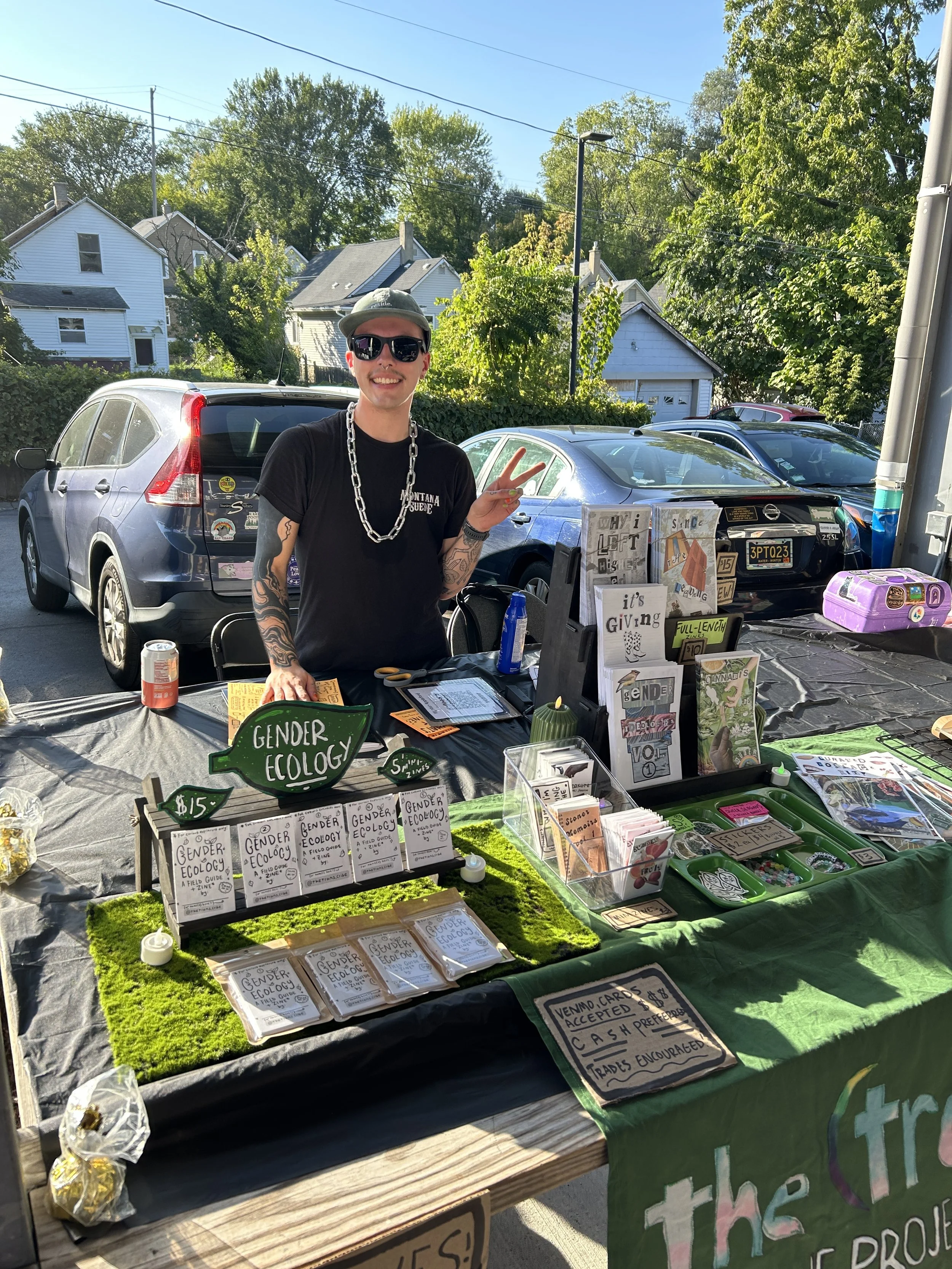
A shot of me at the Transfuse Night Market in Grand Rapids this September
Lesson #2: ESPECIALLY if your market is outdoors, pack like you're going camping.
I learned this lesson the hard way by being underprepared at several markets and paying the price in a day of discomfort! You will absolutely need the sunscreen, the bug spray, the bottled water, the hand warmers (if it's any season other than summer), the power bank and phone charger. As a vegan, I also usually assume that there will be nothing for me to eat there, so I bring along my own sandwiches and snacks. You'll also want table weights, a tablecloth that stretches over your table and holds itself down, clips, and displays that keep everything together. Keep everything in plastic bins with lids that seal shut and invest in a folding wagon to help you carry everything over long distances. I recommend a canopy tent and weights (yes, you'll need them) if you're planning on doing a lot of outdoor markets for your comfort, though you don't have to invest in a full outdoor booth setup up front. There's nothing wrong with just putting your table up somewhere without cover- just be prepared to protect yourself and your wares from the elements quickly. After one sudden, unexpected thunderstorm at a July market this year, I learned that you must always bring a tarp and some umbrellas...you never know!
It's also nice to have a couple of backups of things for yourself, or if your booth neighbor needs something. At this point, I'm perpetually over-prepared and happy to share with fellow vendors if they need something. You'd be surprised by what you may end up needing at markets; power strips, duct tape, superglue, clothespins, batteries, pens, band-aids. For gigs where there will be live music or big crowds, I make sure to pack foam earplugs and keep them handy for fellow overstimulated humans. Remember that you'll be there all day, so just bring a bag with anything you think you'll need to be comfortable- then you can just relax and enjoy your time in the space!
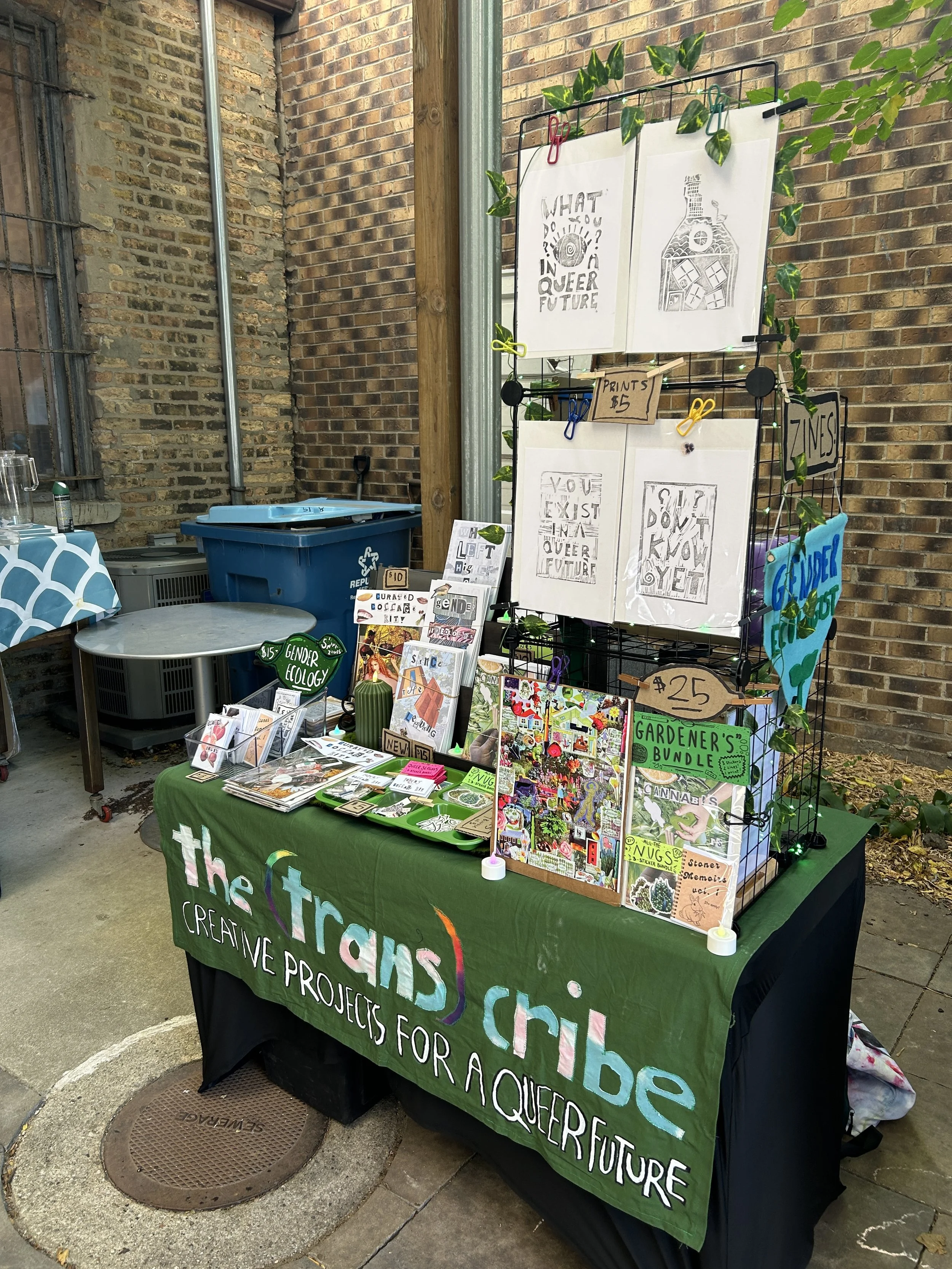
My most up to date outdoor setup on a 4ft table at Early To Bed Maker’s Market this October
Lesson #3: You don't have to build your setup all at once.
I started out with basically nothing in the way of tabling supplies, and I spent my year of markets slowly but surely building out my setup. It can be very expensive to start out buying everything you think that you'll need all at once, so I recommend starting small with just a 4-6ft table, a chair, and a tablecloth and going from there. Make your own tablecloth for bonus DIY points! You can get creative with tabling supplies- I've used makeup organizers, photo frame displays, magazine holders, and little drawer baskets to hold my wares, and all have worked in varying degrees of success. I've found that using vertical space and adding layers to your table are key to giving yourself the most room, and I do wish I'd bought a wire grid display way sooner. I chose a cohesive color palette and looked for displays that fit the vibe. I also added in little fun elements along the way- fake ivy vines, no-flame tealight candles, and flickering LED lights to help draw people in. At one point, I had a free "trinket swap" station that was a great conversation-starter and brought people to the table without the pressure of having to spend money. All the little details are extra, but can really help give your table personality and make customers interested in what you have for sale.
Lots of artists swear by a self-service kind of table, where folks can "shop" independently and present you with their "basket" to check out, while others opt for a model where folks point at a display and the vendor selects items from back stock. It's up to you to decide what makes the most sense for your wares and business model. I find self-service works relatively well for my zines and stickers, though I do have my prints displayed vertically for folks to point to as a space-saver. Either way, the most important thing on your table is signage about how much things cost and how people can pay you. Having prices and methods of payment clearly displayed helps your customers be less anxious about buying something from you. You don't have to do anything fancy- I handwrite all my price tags on cardboard with Sharpies. Try out different things at different markets and see what works well, and don't be afraid to tweak things as you go!
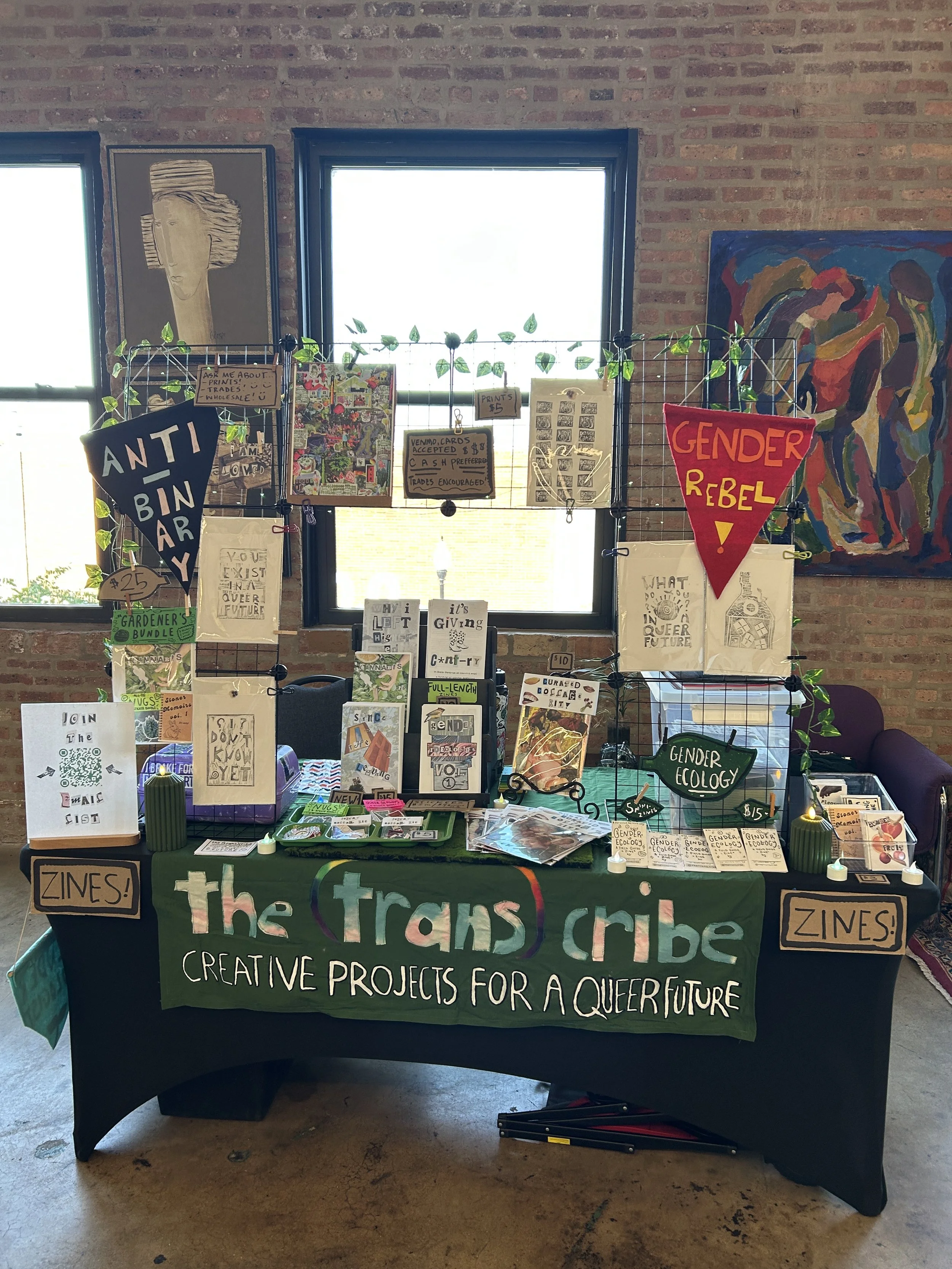
My most up-to-date table setup at Witch Crafts Market this October
Lesson #4: Embrace the multitask
Find clever ways to make your time at the markets work for you! When applying to fests and markets, if you're able/willing to travel, think about the places you'd like to visit and see if they have a scene there for your kind of products. Traveling for work like this is a great way to see new places on a budget- usually, you'll earn money while you're there and many expenses can be written off. If you're a social person, you also then have the benefit of meeting lots of like-minded people at the gig, and sometimes there are even afterparties if you are so inclined. It's so easy to make friends at the fest if that's something you like to do.
At your table, bring a free promotional item that you can give out during the day. This makes you memorable and also connects you with more folks than just those who are spending money. I have a fun demo minizine that I print in advance and fold throughout markets to give to folks. Folding zines at my table keeps my hands busy, passes the time if things are slow, and it helps bring in people who are interested in the process of zinemaking. Make sure whatever you hand out has your information on it, so they know how to find you and your work again if it resonates!
If you are someone who makes content about your work, markets are a great time to film yourself. Get lots of b-roll of setting up, your table, the crowds, and I try to get some me-only shots of conversations I'm having periodically as well. The footage you collect can be usable in multiple ways for a long time!
As with all things, markets are significantly easier if you have a table buddy there to help you out. I've done about half my markets solo, and those days always feel longer and harder and I'm more tired after. Bring someone who can help you lift heavy, or hold down the fort while you run to the bathroom, or film you while it's busy. If you're riding solo, don't be afraid to chat with your table neighbors and be friendly! They will have their own wares to worry about, but it's nice to be looking out for each other and a little camaraderie goes a long way.
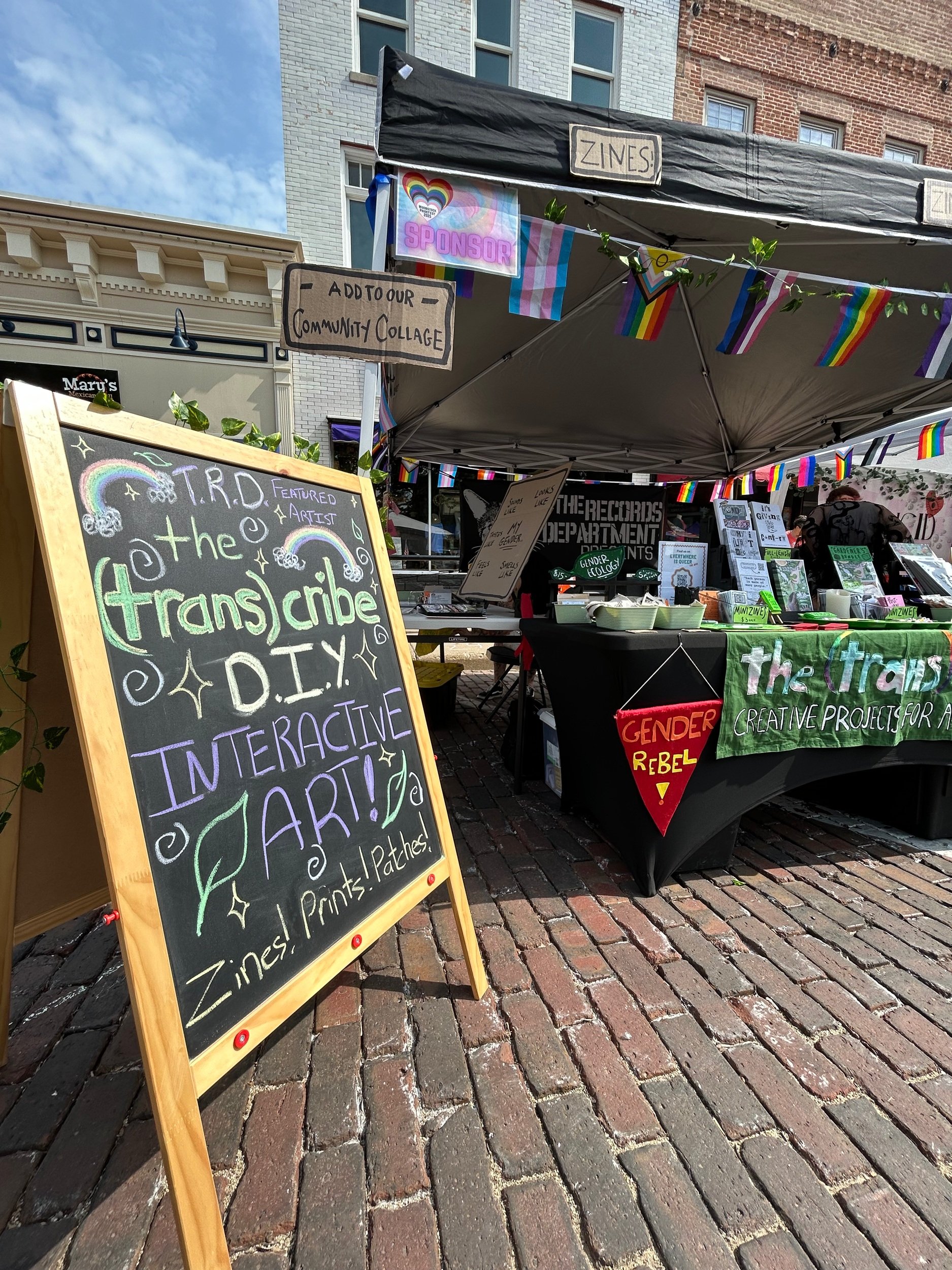
My Featured Artist booth with The Records Department at Woodstock Pride this June
Rapid Fire Red Flags
In my experience, I try to avoid markets and hosts that...
Use generative AI for advertising (especially if it's an ART MARKET...y'all)
Have little to no communication between the host and the vendors
Do not post past events (or else clearly ONLY post from one or two prior events)
Do not provide anything for vendors (snacks & drinks are the bare minimum, frankly, and tables/chairs being provided are very common)
Are not present and helpful during the event for vendors or customers
Do not follow up with a chance for you to provide feedback
Only post when they are advertising events, and only post with "launch" intensity
Of course, some of these red flags you may not encounter until you're already at the gig. However, these are things that are reasonable to look out for and may help you decide if you want to return to a market or work with a particular host again. What works for one person may not work for another, and only you can decide what spaces are a good fit for you.
Rapid Fire Green Flags
If I experience these things at a market, I'll definitely return:
Clear communication between host and vendor on official channels (at minimum I expect one email before the event with on-the-day details and any needed info from the host)
Affordable/reasonable entry fee
Checking in with vendors throughout the day
Coordinated volunteer team available for support
Solid foot traffic & good conversations throughout the day with customers and fellow vendors
Sometimes, attending a market is more about networking and visibility than it is about sales, so I don't necessarily consider how much I profited in my consideration. If the vibes are good and the conversations are quality, I'm happy to return even if I didn't make a lot of money. It is particularly important to me that I feel comfortable as a Queer person, by both the organizers and the customer base- which is not necessarily a given! Luckily, zinefests and DIY spaces are often overwhelmingly Queer, so for the most part I have had good experiences, and I just don't return to the ones where that's not the case.
Attending markets and zinefests is a great way to sell your wares and connect with a creative community. I have really enjoyed my year of markets, and am grateful for all the cool humans I've been able to meet in the process. The biggest lesson I've learned is that I can do it, that making and selling things is possible, and that there are folks out there interested in my work. It's been so encouraging to take part in so many fests, and in 2026 I plan to continue to attend the markets that best fit my time and energy. I hope to see you at a table one of these days!
